Bárbara Mestra Pessanha of Santa Clara-a-Nova, arrested by the Évora Inquisition in 1753
According to the Torre do Tombo catalogue, Bárbara Mestra Pessanha was born in Santa Clara, in the termo (district) of Almodôvar, the village now called Santa Clara-a-Nova, in Portugal’s Alentejo. She was the daughter of Diogo Mestre Pessanha and Margarida Guerreira. She married the farmer Bartolomeu Nunes and lived in Ourique. Denounced by her own sister-in-law, Francisca Nunes, she was arrested by the Inquisition of Évora on 11 June 1753, accused of "bruxaria, superstições e pacto com o demónio" (witchcraft, superstitions and a pact with the devil). On 27 April 1755 she was sentenced at an auto-da-fé in Évora, beside at least fifteen other defendants. She served her exile in Faro and finished it on 8 July 1757, by then in the town of Torrão. The process has never been digitised. All that is known of her fits in a twelve-line catalogue record.
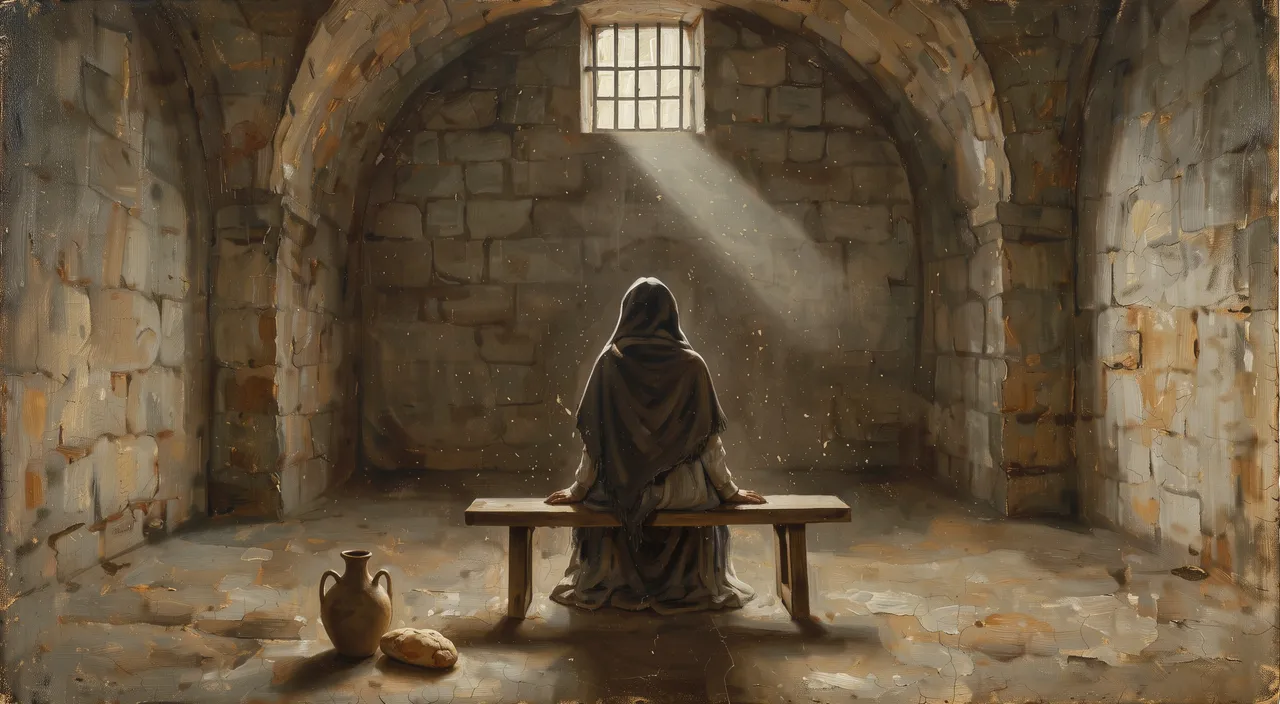
In short
- According to the Torre do Tombo catalogue, Bárbara Mestra Pessanha was born in "S. Clara", termo of Almodôvar. In 1758 the only Santa Clara in that district was Santa Clara-a-Nova.
- The Évora Inquisition arrested her on 11 June 1753 for "bruxaria, superstições e pacto com o demónio" (witchcraft, superstitions and a pact with the devil). She was denounced by her own sister-in-law, Francisca Nunes.
- The record says she "foi atormentada em 1755-03-22, para que acabasse de confessar as culpas": she was tortured on 22 March 1755 "so that she would finish confessing her faults".
- On 27 April 1755, six months before the earthquake, she was sentenced at the auto-da-fé in Évora. She was one of at least six people accused that day of witchcraft, superstition or a pact.
- On 23 May 1755 she left the cells to serve exile in Faro. The exile ended on 8 July 1757, "já na vila do Torrão" (by then in the town of Torrão).
- Of the Évora Inquisition’s 11,513 processes, hers is the only one that joins "Clara" and "Almodôvar". Access is restricted and it has never been digitised.
Timeline
What the process record says, and what happened around it
The catalogue record
Twelve lines written by an archivist
The Torre do Tombo, Portugal’s national archive in Lisbon, holds the processes of the Tribunal do Santo Ofício, the Holy Office. The Évora Inquisition series has 11,513 of them. Each has a record in the DigitArq catalogue giving the crime, the place, the parents and the dates. Everything on this page comes from those records: Bárbara’s process itself, the manuscript, has never been digitised and was not read for this page.
In a search of the whole Holy Office catalogue, hers is the only record that joins the words "Clara" and "Almodôvar". It is also the only one that joins "Pessanha" and "Ourique".
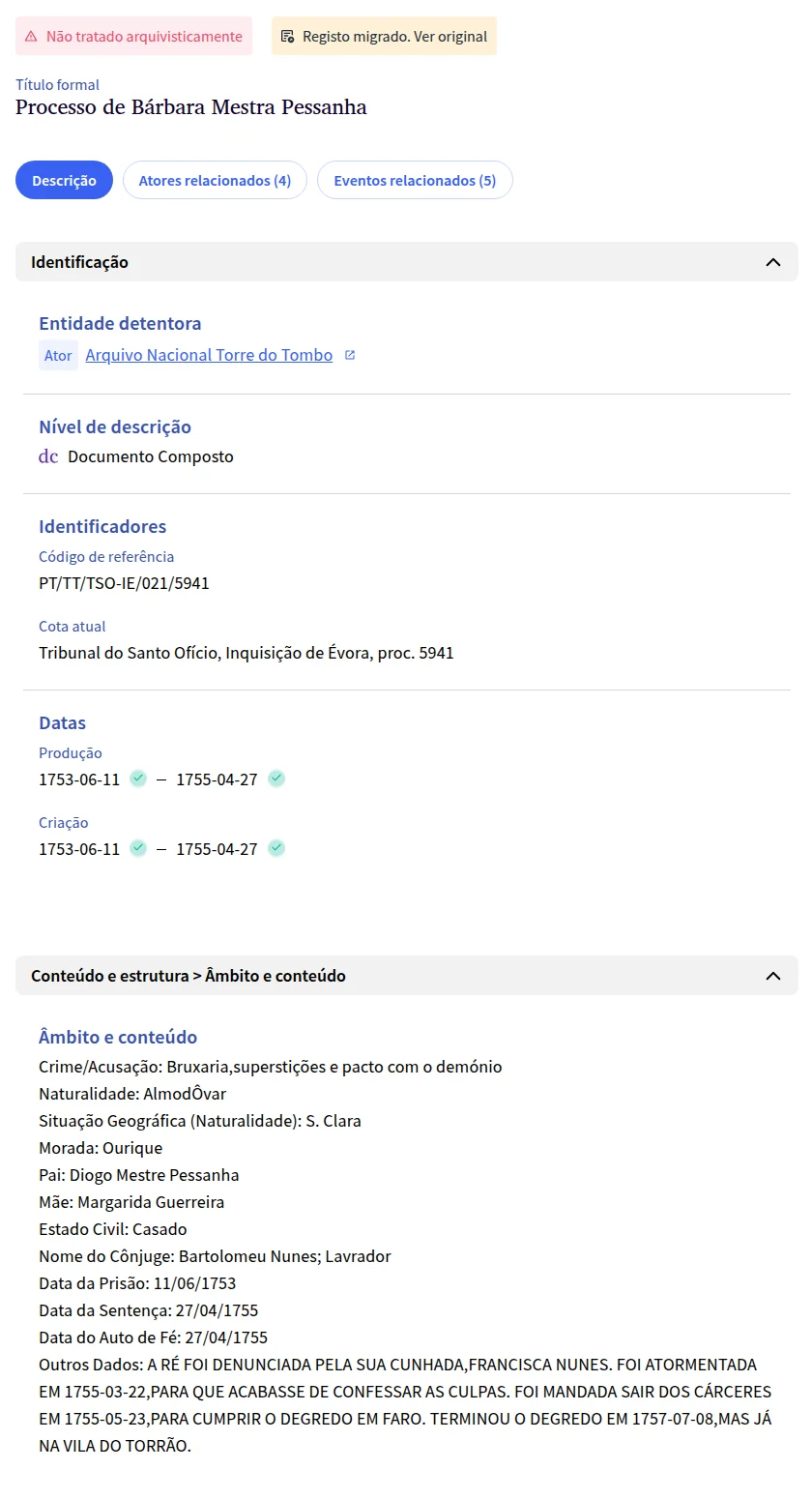
The block below is the "Âmbito e conteúdo" (scope and content) field exactly as the catalogue gives it, in Portuguese and with the catalogue’s spelling.
Crime/Acusação: Bruxaria,superstições e pacto com o demónio
Naturalidade: AlmodÔvar
Situação Geográfica (Naturalidade): S. Clara
Morada: Ourique
Pai: Diogo Mestre Pessanha
Mãe: Margarida Guerreira
Estado Civil: Casado
Nome do Cônjuge: Bartolomeu Nunes; Lavrador
Data da Prisão: 11/06/1753
Data da Sentença: 27/04/1755
Data do Auto de Fé: 27/04/1755
Outros Dados: A RÉ FOI DENUNCIADA PELA SUA CUNHADA,FRANCISCA NUNES. FOI ATORMENTADA EM 1755-03-22,PARA QUE ACABASSE DE CONFESSAR AS CULPAS. FOI MANDADA SAIR DOS CÁRCERES EM 1755-05-23,PARA CUMPRIR O DEGREDO EM FARO. TERMINOU O DEGREDO EM 1757-07-08,MAS JÁ NA VILA DO TORRÃO.
Record details
- Formal title
- Processo de Bárbara Mestra Pessanha
- Reference code
- PT/TT/TSO-IE/021/5941
- Call number
- Tribunal do Santo Ofício, Inquisição de Évora, proc. 5941
- Dates
- 1753-06-11 to 1755-04-27
- Level
- Documento Composto (file)
- Held by
- Arquivo Nacional Torre do Tombo
- Access
- Nível 3a (Acesso condicionado): restricted
- Images
- Not digitised
- Record
- Created 2008-09-17, modified 2024-11-10. "Registo migrado", "Não tratado arquivisticamente" (migrated, not yet fully catalogued).
"Estado Civil: Casado" (marital status: married) is in the masculine, although the record calls her "A RÉ", the female defendant. It is the catalogue’s formula for that field, not a doubt about who she was.
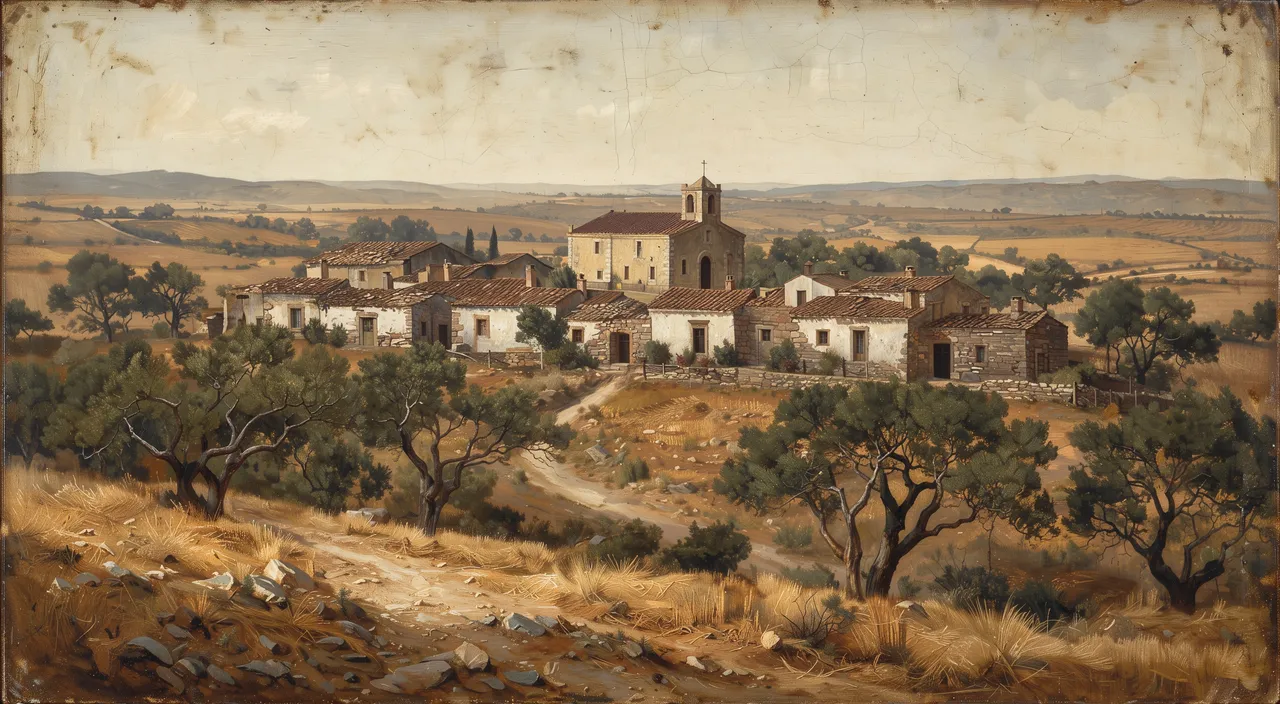
Santa Clara, around 1750
Why "S. Clara, Almodôvar" is Santa Clara-a-Nova
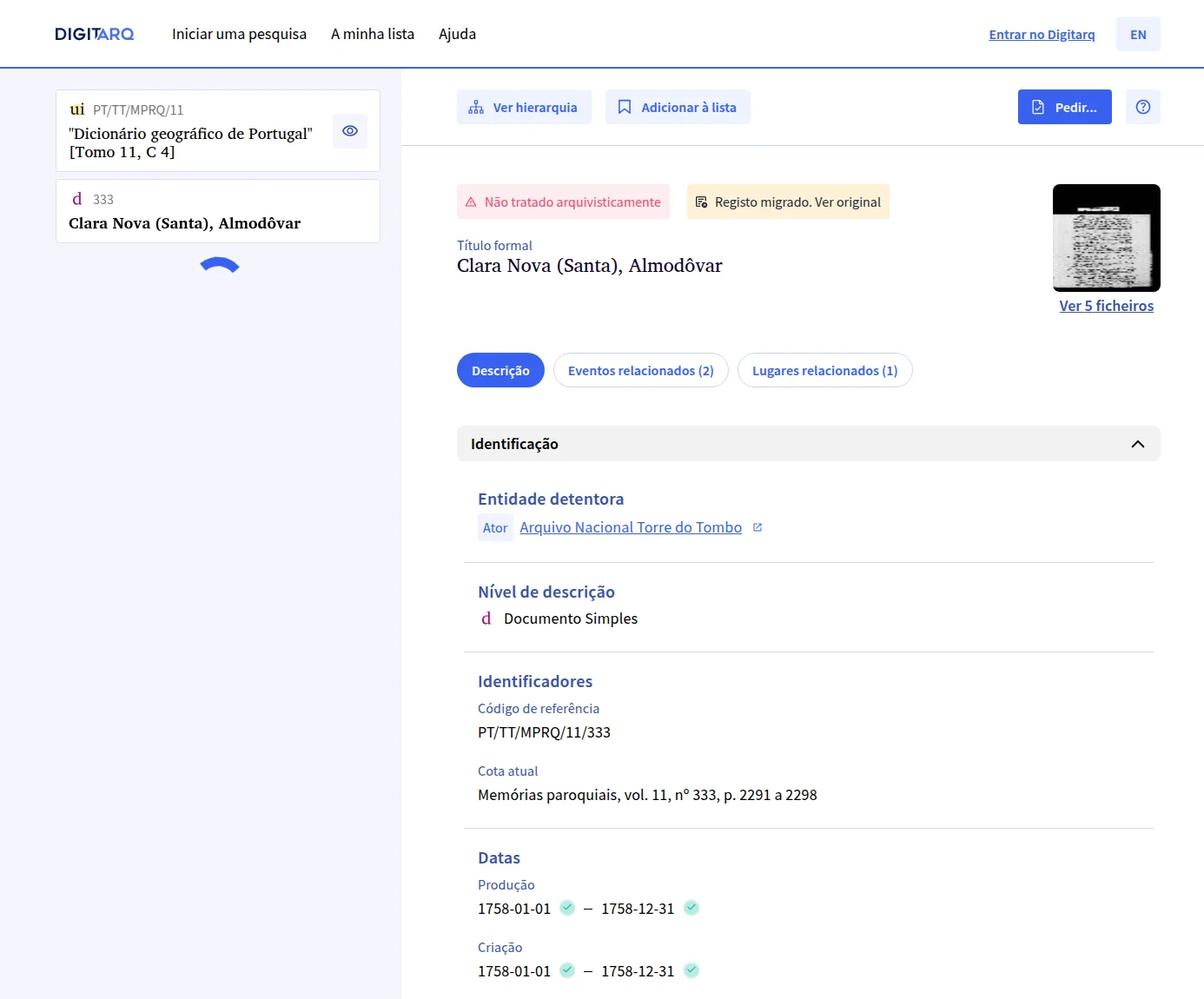
The record says "Naturalidade: AlmodÔvar" and "Situação Geográfica (Naturalidade): S. Clara". In 1758 the parish priest answered the kingdom’s survey and wrote: "Esta freguezia se chama, a de Sancta Clara a Nova, sita no termo, da Villa de Almodouvar e Comarca do Campo de Ourique, Arcebispado de Evora" (this parish is called Santa Clara a Nova, in the district of the town of Almodôvar). The same text places "a freguezia de Sancta Clara a Velha" in the "termo da villa de Ourique". Portugal Sacro-Profano (1767) also lists the two as separate parishes. There was no other Santa Clara in the Almodôvar district.
The 1758 memoir describes the place where Bárbara was born. The parish had 230 households, scattered across farmsteads, with 640 "pessoas maiores" and 200 "menores" (adults and minors). The church stood in "huma pequena aldeya, chamada da igreija", a small hamlet named after the church. Its patron saint was Saint Clare, and it had five altars. People lived on wheat, rye, barley and livestock. Évora, seat of the archdiocese and of the Inquisition, was nineteen leagues away.
A 1749 book of pastoral visitations lists "Santa Clara-a-Nova, Almodôvar (f. 58 à 63)" among the churches visited by the Archbishop of Évora, D. Frei Miguel de Távora. The item of 24 June 1749 in that place in the book leaves orders on "os livros dos batismos e dos casamento" (the baptism and marriage books) and for a "Confraria de Santa Clara". The catalogue does not say outright that this item is Santa Clara-a-Nova’s; it is deduced from the order of the folios. In 1761 there was another visitation of the "Igreja de Santa Clara a Nova, Almodôvar".
One caveat: the record is a summary. Inside the process there should be the genealogy Bárbara herself declared, with the exact parish. Only that page will confirm it.
Sources:[1][14][15][13][27][16][17]
Denunciation and arrest
11 June 1753
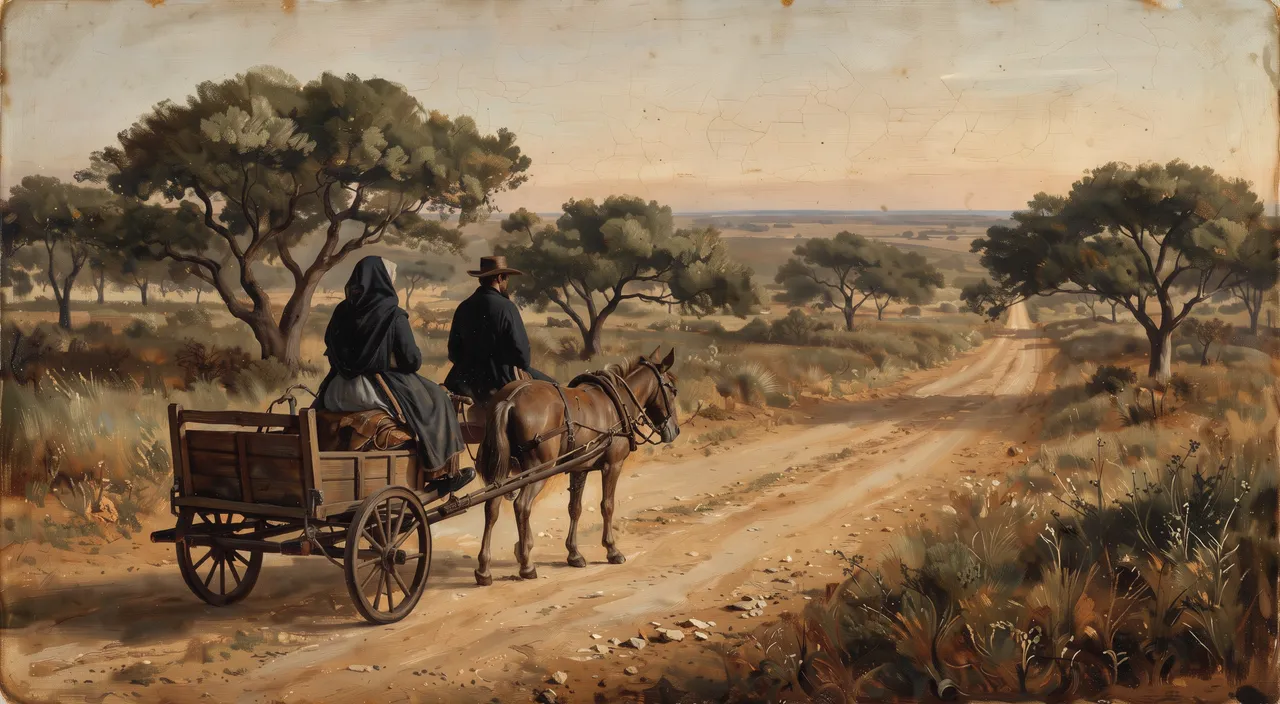
The record does not say how old she was. It does not say how she spent her days. It says who denounced her: "A RÉ FOI DENUNCIADA PELA SUA CUNHADA, FRANCISCA NUNES" (the defendant was denounced by her sister-in-law, Francisca Nunes). The catalogue does not say why, or when.
On 11 June 1753 Bárbara was arrested on the orders of the Holy Office of Évora. The charge, in the catalogue’s words: "bruxaria, superstições e pacto com o demónio".
Note the second word: superstitions. To the tribunal, witchcraft was above all ignorance to be corrected, not a power to be feared. The historian José Pedro Paiva studied these trials in a book whose title says a great deal: Bruxaria e superstição num país sem "caça às bruxas" (Witchcraft and superstition in a country without a "witch hunt").
Four cases from the hills in ten years
The sorcery, witchcraft and pact processes that name Almodôvar
Bárbara was not the first from these hills. The Holy Office catalogue has 33 records that name Almodôvar. Read in full, they contain exactly four 18th-century Évora processes for sorcery, witchcraft or a pact, all between 1745 and 1755.
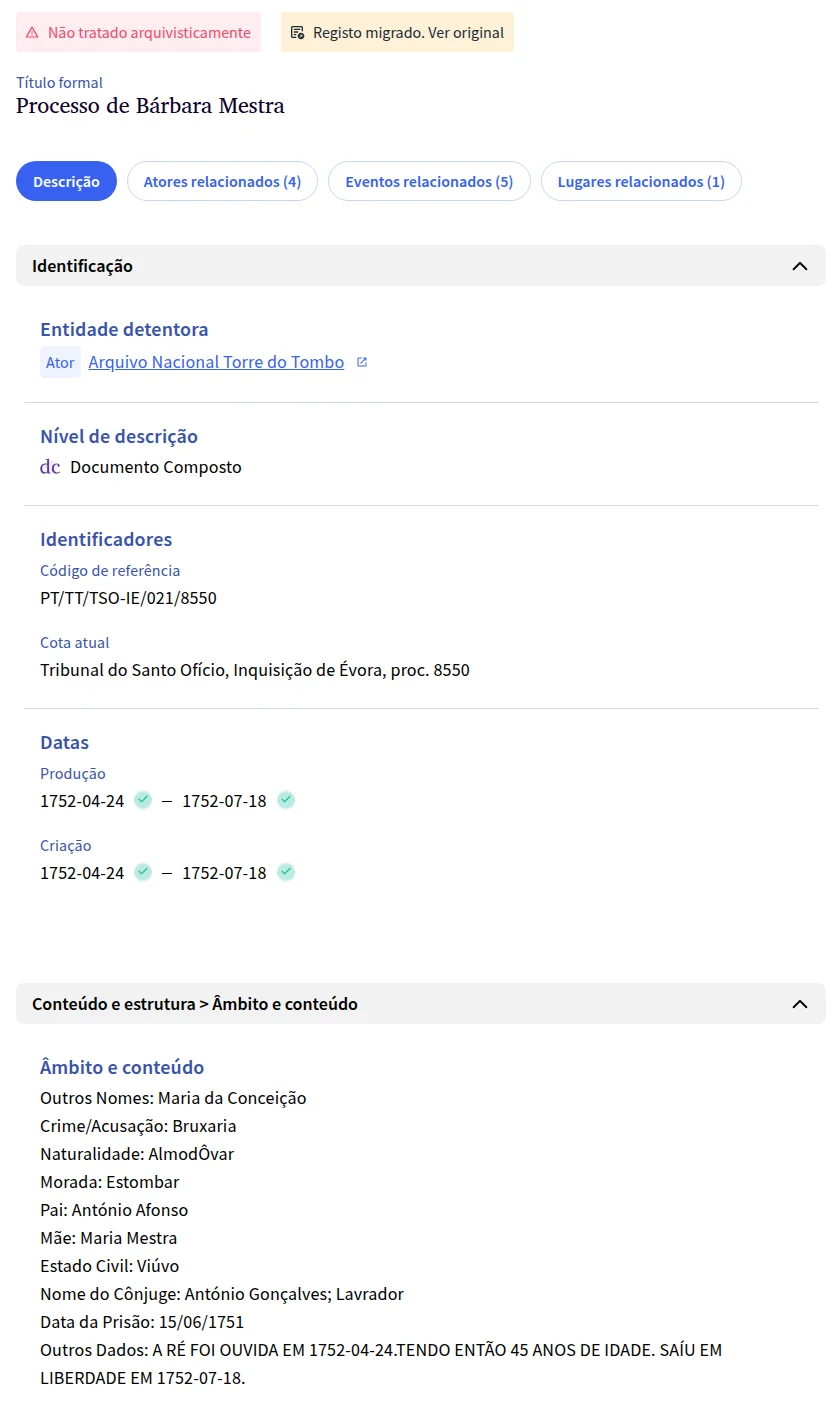
The other Bárbara Mestra
Process 8550 is called "Processo de Bárbara Mestra". It is not her. It is another woman born in Almodôvar, living in Estombar in the Algarve, daughter of António Afonso and Maria Mestra, widow of António Gonçalves. She was heard on 24 April 1752, "TENDO ENTÃO 45 ANOS DE IDADE" (then 45 years old), and released on 18 July 1752.
Different parents, a different husband, and no mention of Santa Clara. She was released eleven months before Bárbara Mestra Pessanha was arrested. The catalogue does not connect the two cases.
Évora, 1755
The torture, the auto-da-fé and who stood beside her
Twenty-one months after her arrest, on 22 March 1755, the record says she "foi atormentada em 1755-03-22, para que acabasse de confessar as culpas": she was tortured "so that she would finish confessing her faults". Torture was then ordinary judicial practice in the courts of Europe, civil and ecclesiastical. The catalogue says nothing more about that day.
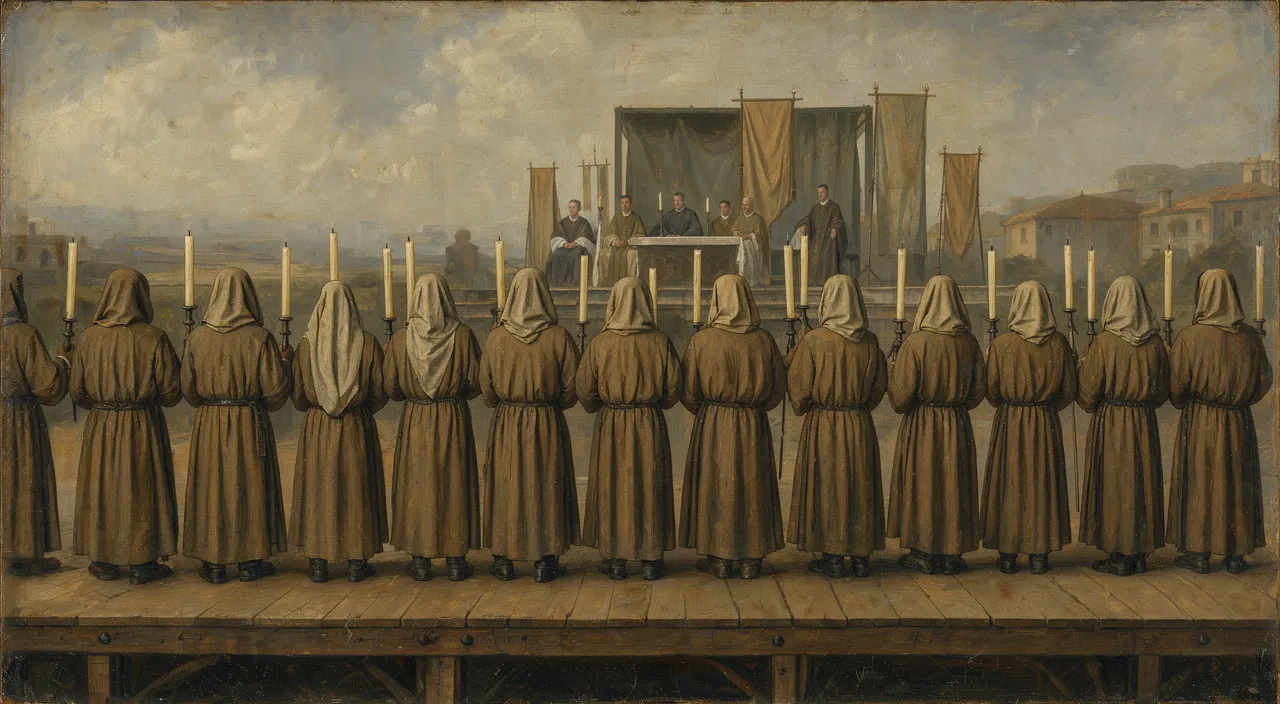
On 27 April 1755 Bárbara was sentenced at an auto-da-fé in Évora. The sentence carries the same date. She was not alone.
Sources:[1]
The auto-da-fé of 27 April 1755
A search of the records of the Évora processes of the period found sixteen defendants whose records name this auto-da-fé: six accused of witchcraft, superstition or a pact, nine of Judaism and one of obstructing the Holy Office. It is a minimum: the list may be incomplete. Crimes are given as the catalogue writes them.
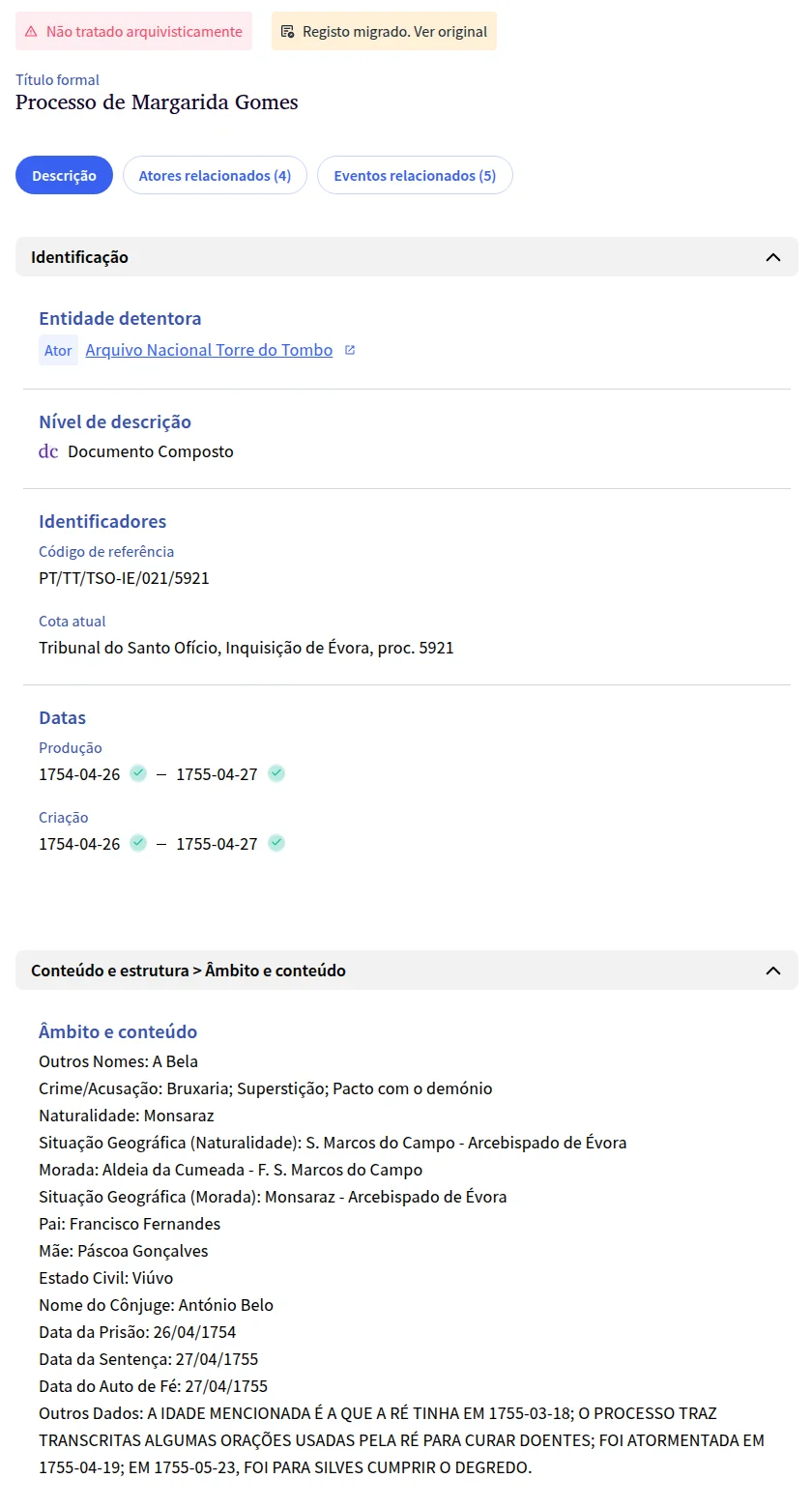
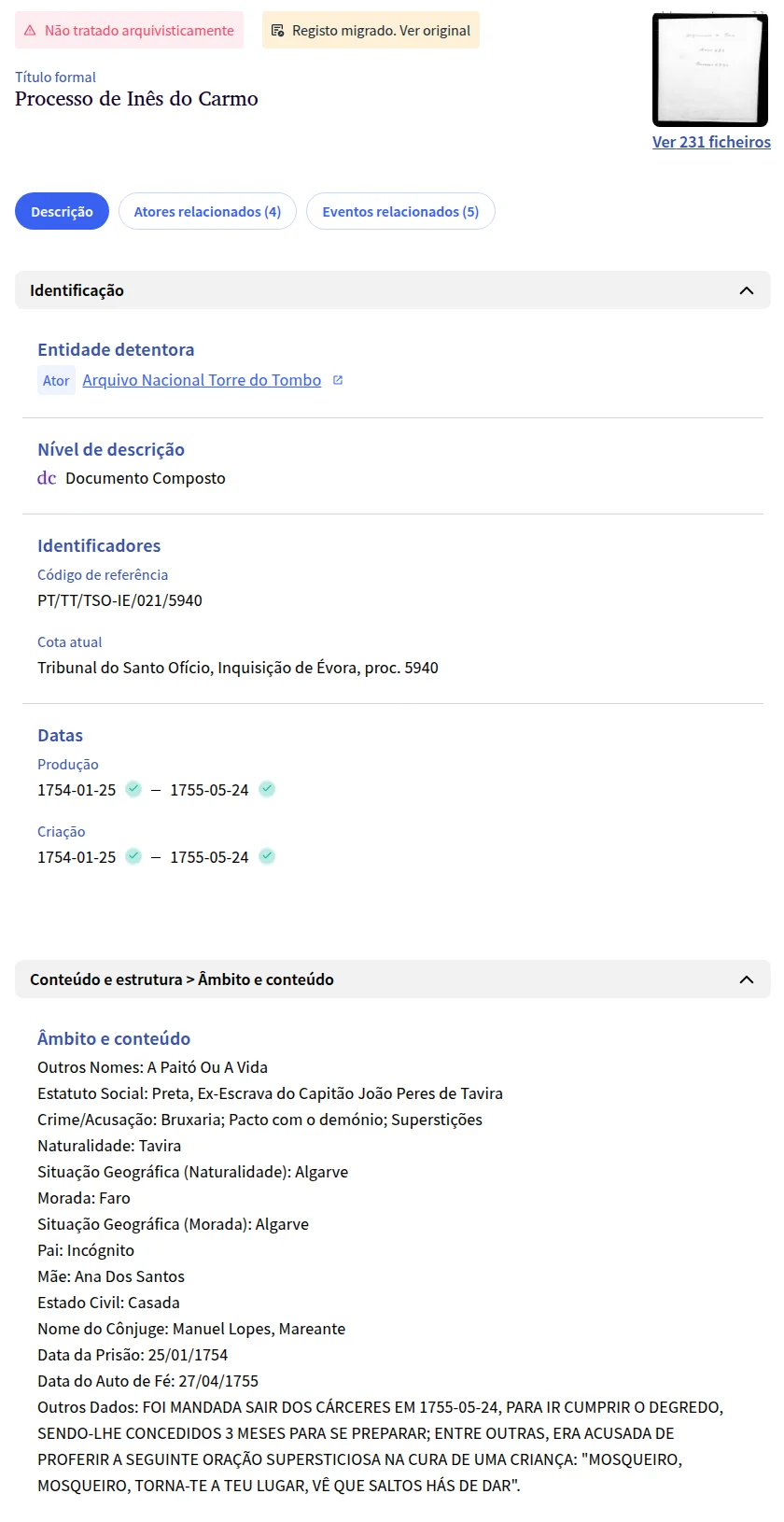
The catalogue gives a glimpse of what was then called witchcraft. The process of Margarida Gomes, of Monsaraz, "traz transcritas algumas orações usadas pela ré para curar doentes": it transcribes prayers she used to cure the sick. From the record of Inês do Carmo, of Tavira, a formerly enslaved woman, a prayer said to cure a child survives word for word: "Mosqueiro, mosqueiro, torna-te a teu lugar, vê que saltos hás de dar." Inês do Carmo’s process is digitised: 231 images.
Of the people accused of witchcraft at this auto-da-fé whose sentence the catalogue records, none was sentenced to death. The penalty the records give is exile. For Maria Pereira, a relapsed offender, flogging through the streets of Évora was added.
Exile
Faro, the earthquake and Torrão
On 23 May 1755 Bárbara "foi mandada sair dos cárceres", the record says, "para cumprir o degredo em Faro": she was ordered out of the cells to serve her exile in Faro. The same day Margarida Gomes left for Silves. Inês do Carmo left the next day, with three months to prepare.
Six months later, on 1 November 1755, the earth shook. In Santa Clara-a-Nova, the chapel of the church "padesceo no terremoto do anno de mil setecentos e sincoenta e sinco algua ruina, que ao prezente ahinda se acha sem reparo", the parish priest wrote in 1758: it was damaged in the earthquake and still unrepaired.
Bárbara’s exile ended on 8 July 1757. The record adds: "mas já na vila do Torrão", by then in the town of Torrão, near Alcácer do Sal. Why Torrão, the catalogue does not say. Four years had passed since her arrest. After that, we have not found her name in any other document.
The same family names
Mestre, Pessanha and Guerreiro in the Almodôvar records
Bárbara’s parents were Diogo Mestre Pessanha and Margarida Guerreira. In the Almodôvar records, the surnames Mestre, Pessanha and Guerreiro recur for a hundred and fifty years, among the town’s notaries and the familiares of the Holy Office, the Inquisition’s local lay agents. They are the same family names. None of these records proves kinship with her.
A familiar of the Holy Office lived in Almodôvar when Bárbara was arrested. The catalogue does not connect him to her case. We also looked for processes of Francisca Nunes and Bartolomeu Nunes: there are none. In the Holy Office records of 1740 to 1760, "Nunes" with Ourique or with Almodôvar appears only in hers. So does "Pessanha" with Ourique, in any year. Whether she was related to the families in the table, only the process will tell. [25][1]
The books still to open
Where the rest of the story is
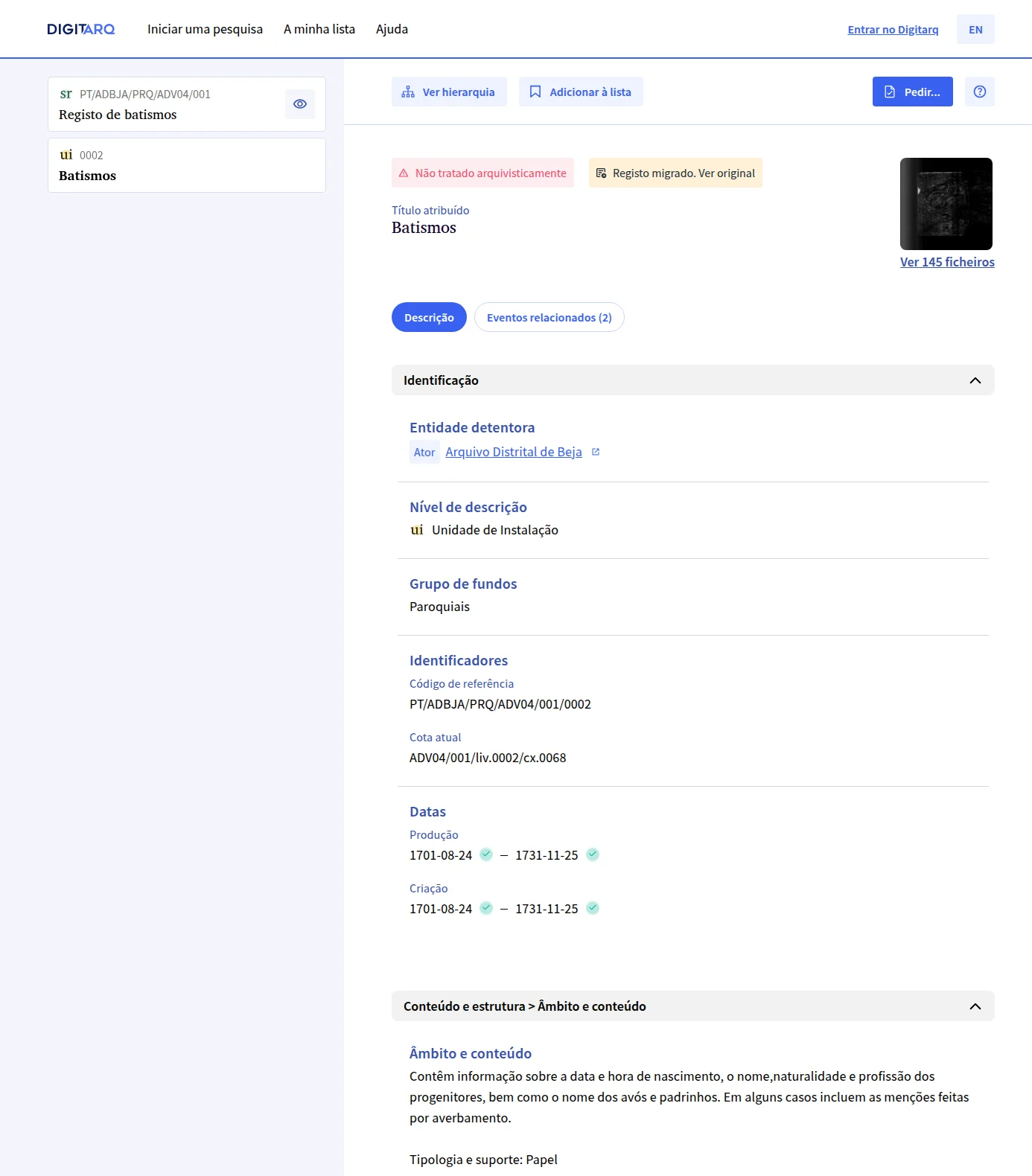
Bárbara’s life can be read more closely in two places. The first is the process itself. The second is the baptism and marriage books of Santa Clara-a-Nova, which are online and have never been indexed by name before 1760.
How to request the process
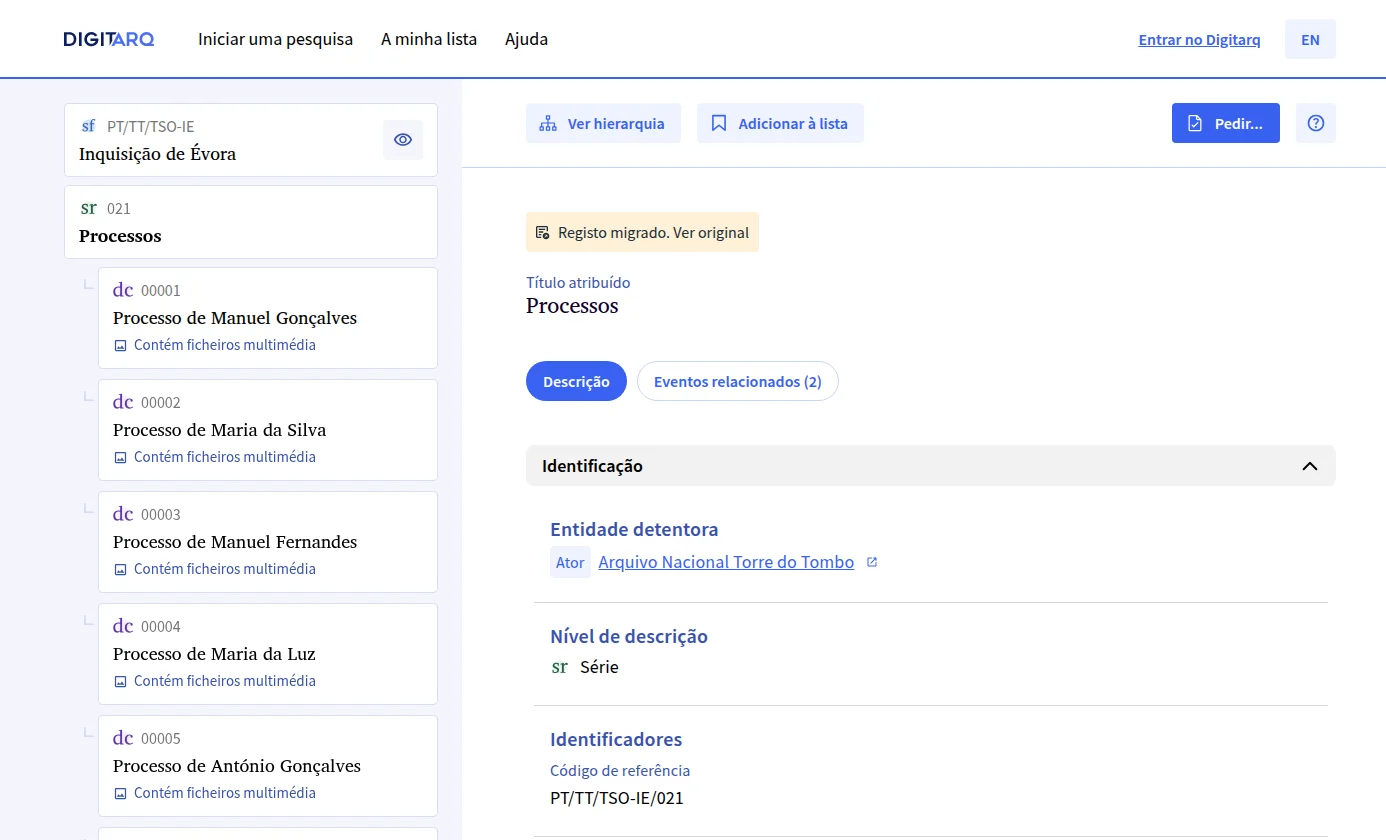
The process is in the Torre do Tombo with "acesso condicionado" (restricted access) and has not been digitised. A reproduction or a reading-room consultation can be requested with the "Pedir…" button on the DigitArq record (a DigitArq account is needed) or from the Torre do Tombo reference service, quoting the code PT/TT/TSO-IE/021/5941.
A complete Inquisition process usually holds the denunciation, the genealogy declared by the defendant (with her place of birth, age and parish), the interrogations, the torture session, the sentence and the "termo de ida" for the exile. That is where what she was accused of doing, and why Torrão, will be found.
Sources:[1]
The parish registers of Santa Clara-a-Nova, Arquivo Distrital de Beja
An estimate, not a fact: if Bárbara was between thirty and fifty when she was arrested, she was born between 1703 and 1723, and her baptism is in book 2, with the names of her parents and grandparents. The marriage of Diogo Mestre Pessanha and Margarida Guerreira should be in one of the two marriage books. The pages have to be read one by one. [19][20][21]
Open questions
What the catalogue does not answer, and what is estimate or deduction here. If you know more, please write to us. contact us
- When she was born. The catalogue gives no age. If she was between thirty and fifty in 1753, she was born between 1703 and 1723; that is only an estimate, which baptism book 2 can confirm or refute.
- The exact parish. "S. Clara, Almodôvar" can only be Santa Clara-a-Nova in 1758, but the genealogy inside the process will say it in her own words.
- What exactly she was accused of doing. The record gives the crime, not the acts.
- Why Torrão. Her exile was in Faro and ended "já na vila do Torrão". The place of exile may have been changed; the catalogue does not explain it.
- Who else was sentenced at the auto-da-fé of 27 April 1755. We found sixteen defendants, but the search did not return every record of the period, and the processes that run past 1755 were not all checked.
- The 1749 visitation. The archbishop’s book lists Santa Clara-a-Nova; that the item of 24 June 1749, with the "Confraria de Santa Clara", is this church’s is deduced from its position in the book.
- Whether she was related to the Mestre, Pessanha and Guerreiro families of Almodôvar. Three Holy Office habilitações have images but no description in the catalogue, and their names combine these surnames: Manuel Raposo Pessanha (PT/TT/TSO-CG/A/008-001/20923), Ildefonso Mestre Guerreiro (008-001/11031) and Manuel Mestre Raposo (008-001/20398). Only the images will say where they came from.
- Whether any familiar of the Holy Office in Almodôvar played a part in her arrest. The catalogue does not say.
- An undated process, that of Valério Lourenço, of the termo of Ourique, accused of "Superstições,bruxaria,malefícios e heresia", married to a "Mariana Mestra" (PT/TT/TSO-IE/021/11698). It may have nothing to do with Bárbara; only the date and the images will tell.
- What happened to her after 8 July 1757.
Frequently asked questions
Who was Bárbara Mestra Pessanha?
A woman born in Santa Clara, in the district of Almodôvar (today Santa Clara-a-Nova, Portugal), daughter of Diogo Mestre Pessanha and Margarida Guerreira, married to the farmer Bartolomeu Nunes and living in Ourique. She was arrested by the Évora Inquisition on 11 June 1753 and sentenced at the auto-da-fé of 27 April 1755. Everything known about her comes from the record of process PT/TT/TSO-IE/021/5941 in the Torre do Tombo catalogue.
What was she accused of?
According to the Torre do Tombo catalogue, of "bruxaria, superstições e pacto com o demónio": witchcraft, superstitions and a pact with the devil. The record does not say what acts she was charged with; that will be in the process, which has never been digitised.
Was she burned?
No. The record says that on 23 May 1755 she was ordered out of the cells to serve exile in Faro, and that the exile ended on 8 July 1757, in the town of Torrão. Of the people accused of witchcraft at that auto-da-fé whose sentence the catalogue records, none was sentenced to death.
Who denounced her?
Her own sister-in-law, Francisca Nunes, according to the record: "A RÉ FOI DENUNCIADA PELA SUA CUNHADA, FRANCISCA NUNES." The catalogue does not say why or when. There is no process of Francisca Nunes or Bartolomeu Nunes in the catalogue.
Where exactly was she born? Why Santa Clara-a-Nova?
The record says "Naturalidade: AlmodÔvar" and "S. Clara". In 1758 the parish priest wrote that the parish of "Sancta Clara a Nova" lay "no termo, da Villa de Almodouvar", while Santa Clara-a-Velha belonged to the district of Ourique. There was no other Santa Clara in the Almodôvar district. The genealogy inside the process will confirm the parish.
What was the auto-da-fé of 27 April 1755?
The public ceremony in Évora at which the Inquisition’s sentences were read. The catalogue records name at least sixteen defendants that day: six accused of witchcraft, superstition or a pact, nine of Judaism, almost all from Sousel, and a student from Monforte accused of obstructing the Holy Office. It took place six months before the earthquake of 1 November 1755.
Can the process be read?
Not online. Process PT/TT/TSO-IE/021/5941 is in the Torre do Tombo with restricted access ("acesso condicionado") and has not been digitised. A reproduction or consultation can be requested with the "Pedir…" button on the DigitArq record or from the Torre do Tombo reference service, quoting the code.
Were there other cases from Almodôvar?
Yes. Among the 33 Holy Office records that name Almodôvar there are four 18th-century Évora processes for sorcery, witchcraft or a pact, all between 1745 and 1755: Silvestre Rodrigues and Maria Dias, of Santa Cruz, another Bárbara Mestra, living in Estombar, and Bárbara Mestra Pessanha.
Video
The story in seven minutes
Chapters (in Portuguese)
- 0:00Intro
- 0:05I. Uma linha no catálogo (One line in the catalogue)
- 0:49II. Santa Clara, por volta de 1750 (Santa Clara around 1750)
- 1:39III. A denúncia (The denunciation)
- 2:50IV. Évora, 1755
- 4:52V. O degredo (Exile)
- 5:41VI. Os livros por abrir (The books still to open)
Keep exploring
History
From the megaliths to the restored parish: five thousand years in this land.
Read the historyThe Rio Mira rises here
The same 1758 parish memoir, read for another question: where the river rises.
Read about the Rio MiraThe Legend of Santa Clara-a-Nova
The lagoon, the white dove and the church that moved.
Read the legendThe wrong name in the law
The parish restored in 2025 with an extra hyphen in its name.
Read the caseThe Village
Where it is, how many we are and what the parish lives on.
Meet the villageDocuments and sources
Every catalogue record and page was consulted on 8 November 2026. Quotations are verbatim, with each source’s spelling, in Portuguese where the source is Portuguese. The manuscript of the process was not read: everything said about Bárbara’s case comes from the catalogue record. The numbers in square brackets throughout the page point to this list.
Dated captures of every record and the catalogue entries as data are kept by the site and available on request: contact us.
Processes of the Évora Inquisition (Torre do Tombo)
- Processo de Bárbara Mestra Pessanha (process of Bárbara Mestra Pessanha), PT/TT/TSO-IE/021/5941Issued by: Arquivo Nacional da Torre do Tombo, DigitArq catalogue. Date: 11 June 1753 to 27 April 1755; record consulted 8 November 2026.What it shows: Call number "Tribunal do Santo Ofício, Inquisição de Évora, proc. 5941". Crime, birthplace "AlmodÔvar" and "S. Clara", residence Ourique, parents, spouse, dates of arrest, sentence and auto-da-fé, denunciation by her sister-in-law, torture, exile in Faro, end of exile in Torrão. Access "Nível 3a (Acesso condicionado)" (restricted). Not digitised.
- Series "Processos" of the Évora Inquisition, PT/TT/TSO-IE/021Issued by: Arquivo Nacional da Torre do Tombo, DigitArq catalogue. Date: Consulted 8 November 2026.What it shows: 11,513 processes described. Scope: "Processos a pessoas acusadas de judaísmo e de diversos crimes de blasfémia, de heresia, em todas as suas versões, de feitiçaria, de bigamia, de sodomia e aos suspeitos de ideais maçónicos" (people accused of Judaism, blasphemy, heresy, sorcery, bigamy, sodomy and suspected freemasons).
- Processo de Bárbara Mestra, PT/TT/TSO-IE/021/8550Issued by: Arquivo Nacional da Torre do Tombo, DigitArq catalogue. Date: 24 April to 18 July 1752.What it shows: A different woman: "Crime/Acusação: Bruxaria", born in Almodôvar, living in Estombar, daughter of António Afonso and Maria Mestra, widow of António Gonçalves, arrested 15 June 1751, "SAÍU EM LIBERDADE EM 1752-07-18" (released).
- Processo de Silvestre Rodrigues, PT/TT/TSO-IE/021/3698Issued by: Arquivo Nacional da Torre do Tombo, DigitArq catalogue. Date: 1745 to 1747.What it shows: "Feitiçaria e pacto com o demónio" (sorcery and a pact with the devil). Born in Santa Cruz, termo of Almodôvar. Arrested 15 May 1745, auto-da-fé 19 March 1747. "O RÉU ERA PEDINTE E MENDICANTE" (a beggar).
- Processo de Maria Dias, PT/TT/TSO-IE/021/00502Issued by: Arquivo Nacional da Torre do Tombo, DigitArq catalogue. Date: 1750 to 1752.What it shows: New Christian, "feitiçaria" (sorcery), born in Santa Cruz, termo of Almodôvar. Arrested 3 December 1750; auto-da-fé 23 July 1752; "degredo por tempo de três anos para a cidade de Portalegre" (three years of exile in Portalegre).
- Processo de Margarida Gomes, "A Bela", PT/TT/TSO-IE/021/5921Issued by: Arquivo Nacional da Torre do Tombo, DigitArq catalogue. Date: 26 April 1754 to 27 April 1755.What it shows: "Bruxaria; Superstição; Pacto com o demónio", Monsaraz. "O PROCESSO TRAZ TRANSCRITAS ALGUMAS ORAÇÕES USADAS PELA RÉ PARA CURAR DOENTES" (the process transcribes prayers she used to cure the sick). Auto-da-fé 27 April 1755; to Silves for exile on 23 May 1755.
- Processo de Inês do Carmo, PT/TT/TSO-IE/021/5940 (digitised)Issued by: Arquivo Nacional da Torre do Tombo, DigitArq catalogue. Date: 25 January 1754 to 24 May 1755.What it shows: "Preta, Ex-Escrava do Capitão João Peres de Tavira" (a Black woman, formerly enslaved by Captain João Peres of Tavira), born in Tavira, living in Faro. "Bruxaria; Pacto com o demónio; Superstições". Auto-da-fé 27 April 1755. The prayer said "na cura de uma criança" (to cure a child): "MOSQUEIRO, MOSQUEIRO, TORNA-TE A TEU LUGAR, VÊ QUE SALTOS HÁS DE DAR". 231 images online.
- Processo de Mariana Josefa, "A Azeiteira", PT/TT/TSO-IE/021/2148Issued by: Arquivo Nacional da Torre do Tombo, DigitArq catalogue. Date: Arrested 27 December 1752; auto-da-fé 27 April 1755.What it shows: "Pacto com o diabo" (pact with the devil), Portalegre. Denounced again in 1780, never tried.
- Processo de Manuel Rodrigues da Fonseca, "o Pinhão", PT/TT/TSO-IE/021/7266Issued by: Arquivo Nacional da Torre do Tombo, DigitArq catalogue. Date: Arrested 8 November 1754; auto-da-fé 27 April 1755.What it shows: "Superstição e pacto com o demónio", living in Montemor-o-Novo. Sentenced again at the auto-da-fé of 16 January 1763, with five years of exile in Miranda.
- Processo de Maria Pereira, PT/TT/TSO-IE/021/01763-1Issued by: Arquivo Nacional da Torre do Tombo, DigitArq catalogue. Date: Arrested 10 January 1753; auto-da-fé 27 April 1755.What it shows: "Cristã-velha" (Old Christian), "relapsia em feitiçaria e pacto com o demónio" (relapse into sorcery and pact), born in Albufeira, living in Évora. Flogged through the streets of Évora and exiled for six years to Miranda.
- Processo de António Velez Mantica Bico, PT/TT/TSO-IE/021/1419Issued by: Arquivo Nacional da Torre do Tombo, DigitArq catalogue. Date: Arrested 28 November 1752; auto-da-fé 27 April 1755.What it shows: "Estudante" (student), termo of Monforte. "Impedir o recto ministério do santo ofício" (obstructing the Holy Office).
- Nine Judaism processes from the same auto-da-fé: PT/TT/TSO-IE/021/1418, 2449, 5484, 5486, 5920, 08554, 00832, 05485-1 and 5918Issued by: Arquivo Nacional da Torre do Tombo, DigitArq catalogue. Date: Arrests of 1752 and 1753; auto-da-fé 27 April 1755.What it shows: "Judaísmo; Heresia; Apostasia". Eight defendants born in Sousel and one living in Borba. The link opens the first (Domingos Dias Leitão, 1418); the others can be found in DigitArq by reference code.
Parish memoir, pastoral visitations and parish registers
- Parish memoir of Santa Clara-a-Nova, "Clara Nova (Santa), Almodôvar", PT/TT/MPRQ/11/333Issued by: Arquivo Nacional da Torre do Tombo, DigitArq catalogue. Date: 1758 (dated 5 May 1758 in the transcription).What it shows: The manuscript: "Memórias paroquiais, vol. 11, nº 333, p. 2291 a 2298". Digitised.
- Parish memoir of Santa Clara-a-Nova, 1758, transcription (Portugal 1758)Issued by: CIDEHUS, University of Évora. Date: Consulted 8 November 2026.What it shows: "Esta freguezia se chama, a de Sancta Clara a Nova, sita no termo, da Villa de Almodouvar"; 230 households; the church and its five altars; item 26: the church’s chapel suffered "algua ruina" in the 1755 earthquake and was still unrepaired.
- Parish Memories with Named Entities, Zenodo 4946479 (CC BY 4.0)Issued by: Zenodo. Date: Consulted 8 November 2026.What it shows: The same transcription of the 1758 memoir, with the text naming Santa Clara-a-Velha as "tudo termo da villa de Ourique".
- Pastoral visitation by Archbishop D. Frei Miguel de Távora, 24 June 1749, PT/ADEVR/FE/DIO-CEEVR/L/0040/000011Issued by: Arquivo Distrital de Évora, Câmara Eclesiástica de Évora, DigitArq catalogue. Date: 24 June 1749.What it shows: Orders "sobre os livros dos batismos e dos casamento" (on the baptism and marriage books) and "para a Confraria de Santa Clara" (for the Confraternity of Saint Clare), among others. Book L/0040 lists "Santa Clara-a-Nova, Almodôvar (f. 58 à 63)" as its 11th church; that this item is that church’s is deduced from its position, the catalogue does not say so.
- Pastoral visitation of 15 December 1761, PT/ADEVR/FE/DIO-CEEVR/L/0016/000040Issued by: Arquivo Distrital de Évora, Câmara Eclesiástica de Évora, DigitArq catalogue. Date: 15 December 1761.What it shows: "Provimentos deixados na visita realizda na Igreja de Santa Clara a Nova, Almodôvar, pelo Dr. Francisco Xavier de Andrade." (orders left at the visitation of the church of Santa Clara a Nova).
- Baptisms, book 1 (mixed volume with marriages and deaths), PT/ADBJA/PRQ/ADV04/001/0001Issued by: Arquivo Distrital de Beja, parish of Santa Clara-a-Nova, DigitArq catalogue. Date: 17 August 1687 to 1 May 1701.What it shows: 85 images online. No name index.
- Baptisms, book 2, PT/ADBJA/PRQ/ADV04/001/0002Issued by: Arquivo Distrital de Beja, parish of Santa Clara-a-Nova, DigitArq catalogue. Date: 24 August 1701 to 25 November 1731.What it shows: 145 images online. The entries give the parents’ names, birthplaces and occupations and the names of grandparents and godparents. No name index.
- Marriages, book 1 (the same mixed volume), PT/ADBJA/PRQ/ADV04/002/0001Issued by: Arquivo Distrital de Beja, parish of Santa Clara-a-Nova, DigitArq catalogue. Date: 8 July 1685 to 3 January 1700.What it shows: 85 images online. No name index.
- Marriages, book 2, PT/ADBJA/PRQ/ADV04/002/0002Issued by: Arquivo Distrital de Beja, parish of Santa Clara-a-Nova, DigitArq catalogue. Date: 15 May 1701 to 3 January 1755.What it shows: 146 images online. No name index.
- Index of the parish books of Santa Clara-a-Nova (ADV04)Issued by: tombo.pt. Date: Consulted 8 November 2026.What it shows: Every baptism, marriage and death book of the parish, 1685 to 1911, with links to the images.
The surnames Mestre, Pessanha and Guerreiro in Almodôvar
- Habilitação of Diogo Mestre de Brito, PT/TT/TSO-CG/A/008-002/1228Issued by: Arquivo Nacional da Torre do Tombo, DigitArq catalogue. Date: 1668.What it shows: "Pretendente a familiar, morador em Almodôvar [...] neto [...] materno de Diogo Mestre e de Maria Guerreira. Casado com Maria Pessanha, filha de André Pessanha Mestre e de Águeda Mestre." (candidate familiar of the Holy Office living in Almodôvar).
- Jorge Pessanha Mestre, notary’s letter, PT/TT/RGM/S/0012/359826Issued by: Arquivo Nacional da Torre do Tombo, Registo Geral de Mercês, DigitArq catalogue. Date: 21 April 1670.What it shows: "Tabelião do Judicial e Notas, e Escrivão da Almotaçaria da vila de Almodôvar, que vagaram por falecimento de seu pai. Filiação: André Pessanha Mestre." (notary of Almodôvar, succeeding his father).
- Habilitação of António Revés Pereira, PT/TT/TSO-CG/A/008-001/3405Issued by: Arquivo Nacional da Torre do Tombo, DigitArq catalogue. Date: 1751 to 1766.What it shows: "Pretendente a familiar, natural e morador em Almodôvar [...] Obteve carta de familiar a 24 de Abril de 1752" (made a familiar of the Holy Office on 24 April 1752); first wife Mécia Madalena Guerreiro, of Almodôvar.
- Habilitação of Guilherme Joaquim de Matos, PT/TT/TSO-CG/A/008-001/10416Issued by: Arquivo Nacional da Torre do Tombo, DigitArq catalogue. Date: 1816.What it shows: His wife’s paternal grandparents: "António Mestre, natural de Almodôvar" and "Maria Guerreira, natural de Almodôvar".
Printed books
- Portugal Sacro-Profano, vol. 1 (Lisbon, 1767)Issued by: Internet Archive (University of Toronto copy). Date: 1767; consulted 8 November 2026.What it shows: Lists "Santa Clara a nova" and "Santa Clara a velha" as separate parishes.
- José Pedro Paiva, Bruxaria e superstição num país sem "caça às bruxas", 1600-1774Issued by: Editorial Notícias, Lisbon (Google Books entry). Date: 1997; 2nd edition 2002.What it shows: The standard study of witchcraft and sorcery trials in Portugal, including the Évora cases of this period.