The Legend of Santa Clara-a-Nova
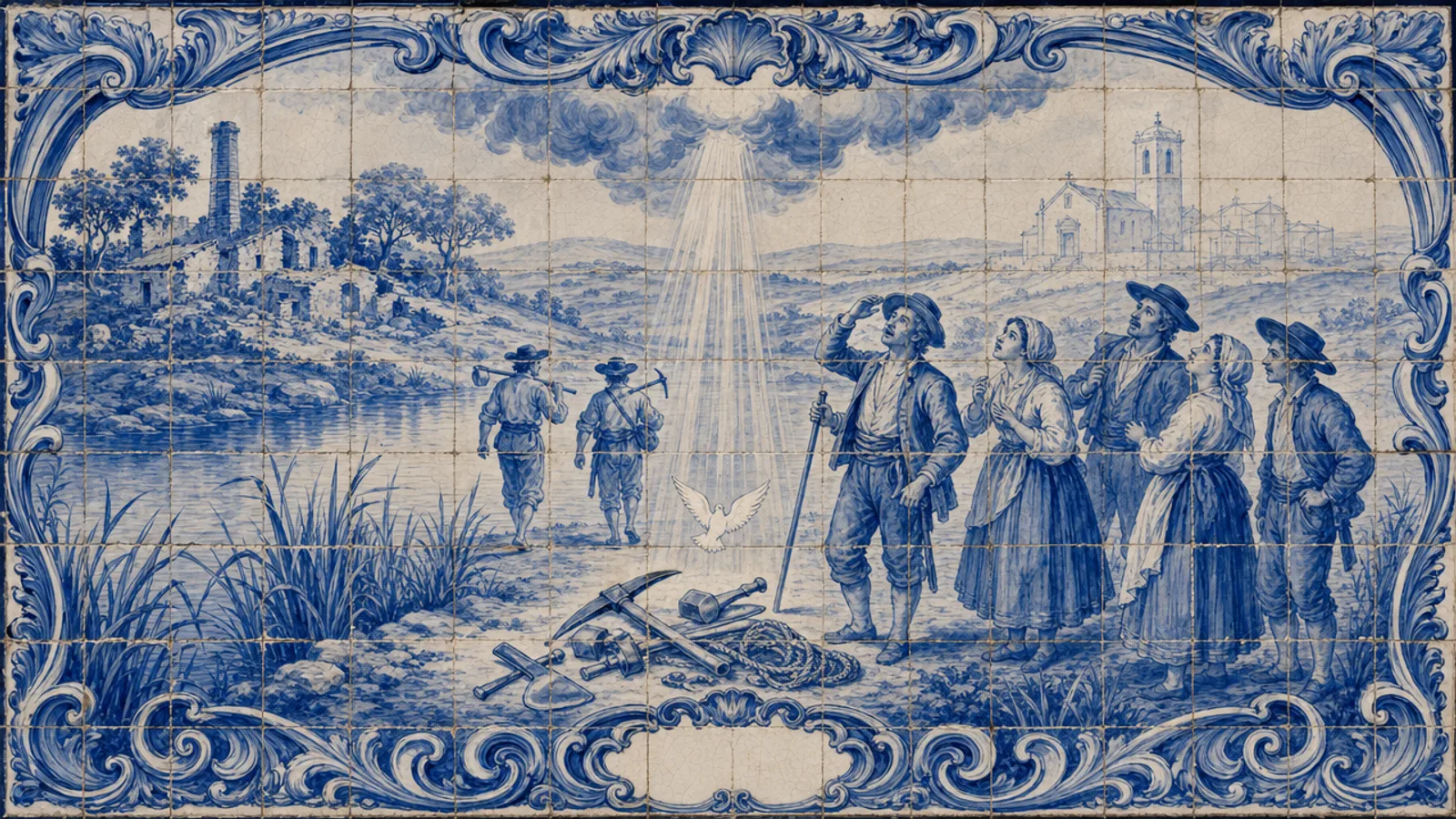
According to legend, Santa Clara-a-Nova was born on the shore of a lagoon. The people of an older village, at a place called Chaminé, set out to build a church, but every morning their tools turned up beside the lagoon, watched over by a white dove, until a voice from heaven ordered the church and the village to be built there under the name of Santa Clara. That is where the parish church stands today. This is the village's founding legend, published by António J. Gonçalves in his Monografia da Vila de Almodôvar and collected in the 1990s by the Portuguese Legend Archive.
In short
- Type: a founding legend of the "disputed site for a church" family (type 7060 in Christiansen's catalogue of migratory legends).
- The old village: a place called Chaminé, where the legend says ruins of collapsed houses can still be seen.
- The chosen site: the shore of a lagoon, where the parish church of Santa Clara-a-Nova now stands.
- The signs: a white dove that moved the tools and cooed day and night; the rushes that still sprout in the village streets.
- Sources: Monografia da Vila de Almodôvar (Gonçalves, pp. 129-130), the Portuguese Legend Archive (APL 206) and the RTP Archives (Antena 1, 2013).
- Video: the legend told in two minutes, narrated in Portuguese, just below.
Watch the legend
The lagoon, the white dove and the voice from heaven, in two minutes
The legend, as it is told
The version published by António J. Gonçalves and recorded by the Portuguese Legend Archive
Where Santa Clara-a-Nova stands today there was, in very ancient times, a lagoon. The village lay elsewhere, at a place still called Chaminé, where ruins of collapsed houses are said to remain.
The legend tells that the people of that village decided to build a church there and began the first works. Then something happened that stayed in the memory of the people: the tools the workmen left at the chosen spot turned up every morning somewhere else, beside the lagoon, exactly where the parish church stands today.
Next to the moved tools there was always a little white dove, cooing with an enchanting, musical sound. The tools were carried back to Chaminé, and they mysteriously reappeared on the shore of the lagoon, with the dove hovering over the water and the tools, staying there night and day.
This went on for a long time. People began to blame the moving of the tools on the mysterious white dove, which would not let them build the church where they wanted, and they went about silent and deep in thought.
Then a voice from heaven broke the silence, saying: "Here, in this place, I want the church and the village called Santa Clara to be built!"
With great faith, those people built the parish church there and, around it, the houses of the village. The legend says that throughout the building work the white dove came every morning and afternoon to greet the workers with tender cooing.
And even today, in some streets of the village and beside the houses, a few rushes appear from time to time. The inhabitants take this as a sign that a lagoon really did exist there.
Reading the legend
The motifs of a founding legend
The story of Santa Clara-a-Nova belongs to a family of legends found all over Europe: the disputed site for a church. People choose a place; a supernatural sign (tools that move, materials that vanish, an animal that insists) chooses another; and the church ends up being built where the sign demands. The Portuguese Legend Archive classifies the village legend exactly so, as type 7060 in Reidar Christiansen's catalogue, "disputed site for a church".
Three elements give this version its local flavour. The first is Chaminé, the site of the old settlement, which the legend says still has ruins of collapsed houses. The second is the lagoon, whose memory people read in the rushes sprouting in the streets: a rare detail, in which the legend points to evidence anyone can go and see. The third is the white dove, which in Christian iconography represents the Holy Spirit and here acts as messenger, until the voice from heaven says in words what the bird had been saying in gestures.
The voice from heaven names the village: "the village called Santa Clara". In one stroke, the legend explains the site of the church, the site of the houses and the name of the place. That is what makes it a founding legend, and not merely a story about a church.
Legend and history
What is known, and what is not
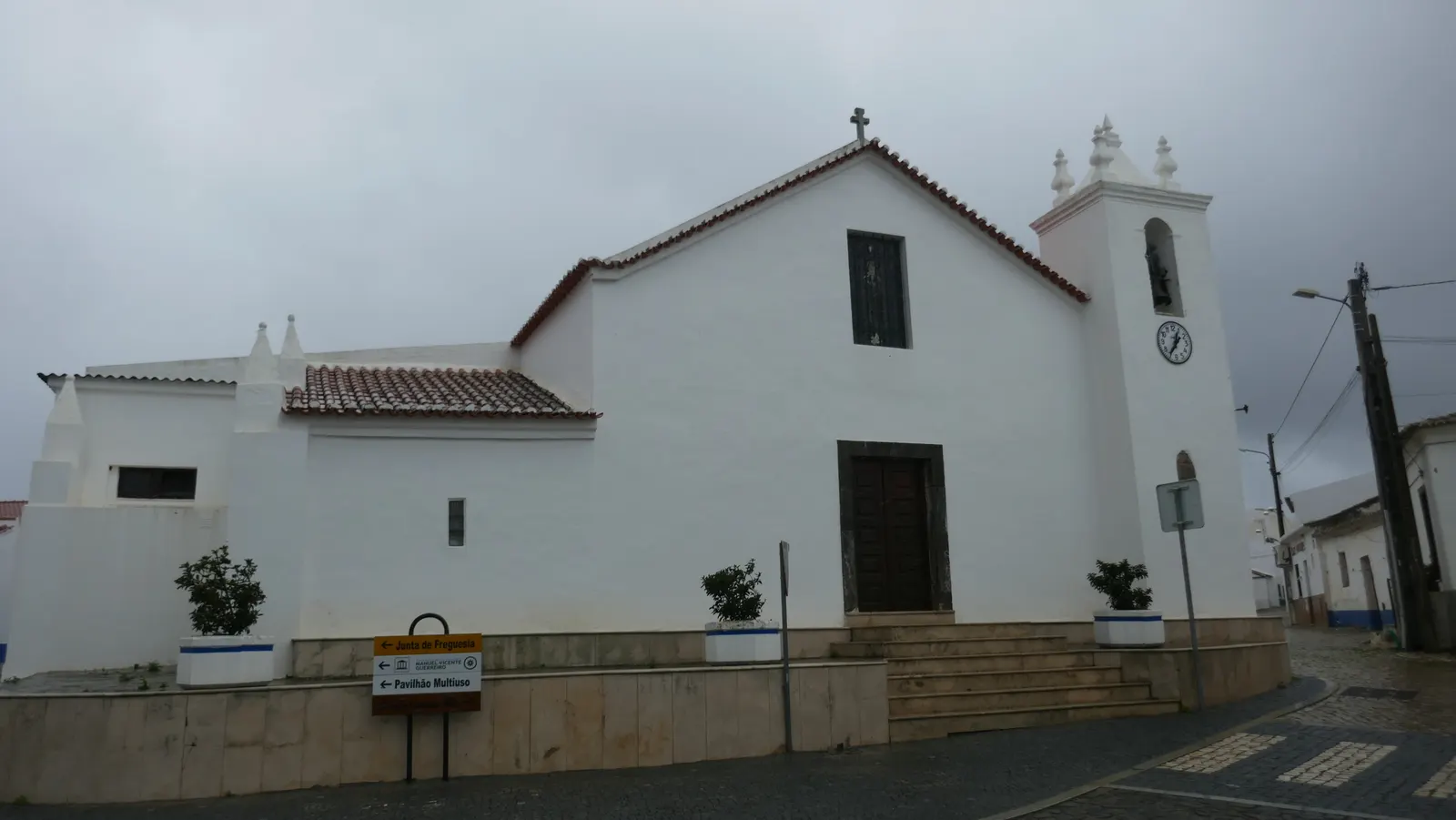
The legend is not a historical document, and this page does not treat it as one. The parish church of Saint Clare of Assisi, on Largo da Igreja, was probably built between the 16th and 17th centuries, according to the SIPA inventory of Portuguese architectural heritage (record IPA.00030301). We found no document about its foundation, about a lagoon on the site of the village, or about an earlier settlement at Chaminé.
What is documented is the legend itself. António J. Gonçalves published it in his Monografia da Vila de Almodôvar (published by the Associação Cultural e Desportiva da Juventude Almodovarense, undated, pp. 129-130). The Portuguese Legend Archive (Arquivo Português de Lendas), run by the Centro de Estudos Ataíde Oliveira at the University of the Algarve, recorded it as entry 206, collected in Santa Clara-a-Nova in the 1990s with belief graded "unsure". On 8 January 2013 the radio station Antena 1 told it in the programme "Histórias Assim Mesmo", narrated and directed by Mafalda Lopes da Costa, now kept in the RTP Archives.
If you know another version of the legend, know where Chaminé is, or remember rushes sprouting in a village street, write to us. That is how these stories stay alive.
Legend fact sheet
- Type
- Sacred legend of a church foundation (Christiansen 7060, "disputed site for a church")
- Place
- Santa Clara-a-Nova, Almodôvar municipality, Beja district, Portugal
- Places in the legend
- Chaminé (the old settlement); the shore of the lagoon, now the parish church
- Collected
- 1990s (20th century), in Santa Clara-a-Nova
- Written source
- António J. Gonçalves, Monografia da Vila de Almodôvar, ACD da Juventude Almodovarense, undated, pp. 129-130
- Archive entry
- Arquivo Português de Lendas, APL 206 (Lendarium, Centro de Estudos Ataíde Oliveira)
- Radio
- Antena 1, "Histórias Assim Mesmo", 8 January 2013 (RTP Archives)
- Video
- A Lenda de Santa Clara-a-Nova, 2 minutes, narrated in Portuguese, on the village's YouTube channel @santa-clara-a-nova (October 2026)
- Belief
- Unsure, according to the archive's classification
Frequently asked questions
What is the legend of Santa Clara-a-Nova?
It is the village's founding legend. The people of an older settlement at Chaminé wanted to build a church, but every morning their tools turned up beside a lagoon, watched over by a white dove. A voice from heaven ordered the church and the village of Santa Clara to be built there. That is where the parish church stands today.
Where was the old village, according to the legend?
At a place called Chaminé, where, the legend says, ruins of collapsed houses still exist. Its exact location is not documented in the sources we consulted. If you know it, write to us.
What does the white dove mean?
In the legend it is the sign that chooses the site: it moves the tools, coos day and night beside the lagoon and greets the workers during construction. In Christian iconography the white dove represents the Holy Spirit, so the legend presents it as a messenger of divine will, later confirmed by the voice from heaven.
Was there really a lagoon at Santa Clara-a-Nova?
We found no documentary or geological record confirming it. The legend offers its own evidence: rushes, which are wetland plants, sprout from time to time in village streets and beside houses, and the inhabitants take them as a sign of the old lagoon.
Where can I read, listen to or watch the legend?
The text is in the Portuguese Legend Archive (Lendarium, entry APL 206), taken from António J. Gonçalves's Monografia da Vila de Almodôvar. The radio version, from the Antena 1 programme "Histórias Assim Mesmo" (8 January 2013), is in the RTP Archives. The links are at the end of this page. To watch it, there is a two-minute video, narrated in Portuguese, on this page and on the village's YouTube channel, @santa-clara-a-nova.
How is this legend different from the Lizard-Man legend?
They are the parish's two legends. The Legend of Santa Clara-a-Nova explains the origin of the village and its church. The Lizard-Man legend tells of an enchanted treasure at Mesas do Castelinho, the archaeological site 2 km from the village, and had real consequences in the destruction of 1986.
Keep exploring
Saint Clare of Assisi and the parish church
The patron saint the voice from heaven named, and the 16th-17th-century church that now stands on the site of the lagoon.
Meet the patron saintThe Lizard-Man Legend
The parish's other legend: an enchanted treasure at Mesas do Castelinho and a guardian half man, half lizard.
Read the legendCuriosities
True stories, old legends and little-known facts about Santa Clara-a-Nova and Almodôvar.
More curiositiesSources
The legend is cited from the sources below. The reading of its motifs and the comparison with documented history are ours.
- Lenda de Santa Clara a Nova, Arquivo Português de Lendas, entry APL 206 (Lendarium, Centro de Estudos Ataíde Oliveira)
- A Lenda de Santa Clara a Nova, programme "Histórias Assim Mesmo", Antena 1, 8 January 2013 (RTP Archives)
- GONÇALVES, António J., Monografia da Vila de Almodôvar, Almodôvar, Associação Cultural e Desportiva da Juventude Almodovarense, undated, pp. 129-130